
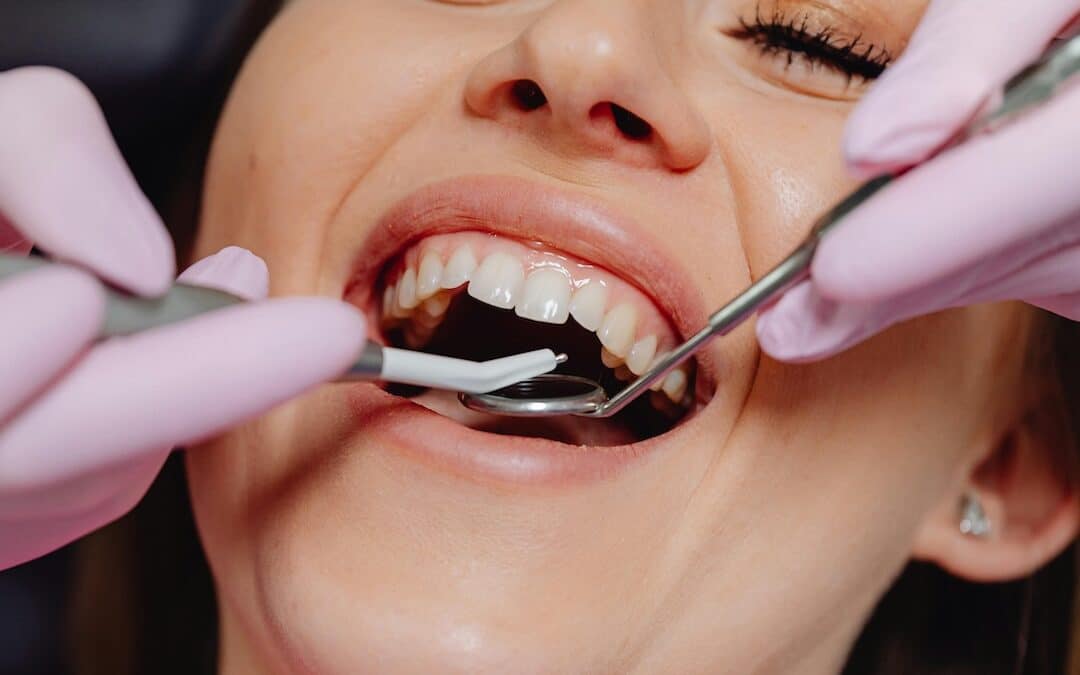
The last thing you want to hear when you’re sitting across from a dentist or periodontist is “you need gum surgery.” It can transform a routine dental appointment into one that feels heavy. Fortunately, even if you’ve recently been diagnosed with moderate to advanced gum disease (periodontitis), surgery isn’t always the only—or even the best—answer.
Perioscopy is a new(ish) minimally invasive treatment that allows periodontists to see and treat deep gum disease without making a single incision. Go ahead and breathe a sigh of relief.
For many patients in the Southern Pines or Sanford areas, this procedure is changing what gum disease treatment looks and feels like. And for many, it’s making surgery altogether unnecessary.
What Is Perioscopy?
Perioscopy is, in brief, a non-surgical periodontal treatment. It uses a tiny fiber-optic dental endoscope, which is essentially a miniature camera, to view the area beneath the gumline.
This camera view allows periodontists to see bacterial deposits, tartar buildup, and root irregularities that were previously difficult—if not impossible—to detect without pulling out a scalpel to cut into tender gum tissue.
With this ability to view the gums—and the full extent of the gum disease—your provider can now provide deep cleaning (scaling and root planing) with a level of precision that previous treatments simply couldn’t reach.
During the procedure, the endoscope is gently guided with a small probe beneath the gum tissue. Magnified images are displayed on a monitor to allow the clinician to see exactly what needs to be treated and where.
Patients typically experience minimal, if any, discomfort. And the procedure can be performed right there in the periodontal office, usually over a few separate appointments.
Who Is Perioscopy For?
Any patients who have been diagnosed with moderate to advanced periodontitis may want to discuss the procedure with their dental health team. In the past, these individuals would have typically been referred for more invasive osseous (bone) surgery or flap surgery.
So, if you’ve been told you have deep periodontal pockets, bone loss around your teeth, or significant tartar buildup below the gumline, this procedure is worth asking about.
It’s also a strong option for folks who:
- Have been referred to a specialist for gum surgery and want to explore a less invasive path first
- Are seeking a second opinion before committing to surgery
- Have health conditions or lifestyle factors that make surgery or longer recovery times a concern
- Simply want to understand all of the available options before committing to a treatment plan
For general dentists and dental hygienists in the Southern Pines and Sanford communities: Perioscopy is an excellent referral option for patients who need more than traditional scaling can offer but who are also hesitant about (or not yet candidates for) surgical intervention. A periodontal consultation can help determine whether this is a fitting next step.
Common Myths and Misconceptions Surrounding Perioscopy
As with any new technique, there are a lot of questions, myths, and misunderstandings around perioscopy. Some of the most common misconceptions include:
- “Perioscopy is only for mild gum disease.” In truth, the opposite is often true. The technique was specifically developed to address the limitations of conventional scaling in patients with deeper pockets and more advanced gum disease. Mild cases may not require it at all.
- “It’s not as effective as surgery.” Research and clinical outcomes consistently show perioscopy can achieve results comparable to surgical treatment—as long as it’s used to address appropriate conditions and candidates. It also needs to be combined with home care and regular maintenance visits. For many relieved patients, it can eliminate the need for surgery completely.
- “It’s a new, unproven technology.” You may be surprised to learn that perioscopy has actually been used clinically for more than two decades. It’s also well-supported by research. Yes, the technology has continued to evolve over that time—we’re continually working to improve every aspect of dentistry—but perioscopy has a solid track record.
- “My dentist would have told me about it if this were truly an option for me.” While we have no doubt your dentist is well-intentioned, this isn’t necessarily the case. Many general dentists focus more on preventive and restorative care. They may not be up to date on every periodontal technology available. Remember, dentistry is always evolving, and it’s not easy to keep on top of the constant flow of changes in every area.
The Biggest Benefits of Perioscopy
Here’s what we’re hearing from our patients about what they value most from perioscopy (which is also supported by the research):
- No surgery. No downtime. Because the procedure requires no incisions or sutures, there’s no surgical recovery period. Most patients are able to return to their normal routines quickly and report minimal sensitivity after the procedure.
- The precision. The endoscope allows the technician to see the root surface and pocket environment as they work, which allows them to be more thorough than with traditional blind scaling. Deposits that could have been missed and left behind can be seen, identified, and removed all at once.
- Tissue preservation. By nature, surgical interventions disrupt existing gum and bone tissues. Because perioscopy works within the gum structure, it helps preserve existing tissue while addressing the source of the disease.
- Greater comfort and less anxiety. For patients who have dental anxiety—an all-too-common issue—as well as those who just don’t like the idea of periodontal surgery, perioscopy is a more relaxing alternative. The procedure is performed in a familiar, comfortable office environment, which many people find less intimidating.
For the right candidate, perioscopy isn’t just a delay of eventual surgery. It can be the treatment. If the disease is successfully controlled and gum health is well-maintained through regular care, many patients can avoid surgery indefinitely.
Ready to Explore Your Gum Disease Treatment Options?
There’s no denying that gum disease is serious—especially as the disease advances. But the conversation doesn’t have to begin and end with the need for surgery. Perioscopy has given thousands of patients an effective, comfortable, and far less disruptive alternative.
If you’ve been diagnosed with periodontitis (and perhaps have been carrying around a referral for periodontal surgery you’ve been putting off), we get it. A consultation is the first step. Please contact our Southern Pines or Sanford office to schedule a consultation. Or ask your general dentist whether a referral makes sense for you.
